The short list
A baseball player needs five things to play: a glove, a batting helmet, a bat (or access to the team's), cleats or running shoes, and a uniform. Catchers need their own protective gear. Everything else is useful, but optional.
What changes with age is the size of each piece, the rules about what's allowed, and how much of it the team provides. Before you buy anything, ask your coach or association two questions: what does the team supply, and are there rules about bats and helmets in your division?
Player checklist
These are the things most players bring themselves.
- Glove. Sized to the player's hand and position. Outfielders use longer gloves, infielders shorter ones, first base and catcher use mitts. Youngest players need a small, soft glove they can actually close.
- Batting helmet. Must fit snugly and not wobble. Many youth divisions require a face guard. Some teams supply helmets; many players prefer their own.
- Bat. Length and weight should suit the player, and it must meet your league's bat rules. Leagues often require a specific certification stamp on the barrel, so check before buying.
- Cleats. Rubber-moulded cleats are standard for youth. Many leagues don't allow metal spikes until older age groups.
- Protective cup. For boys and men, every age, every practice.
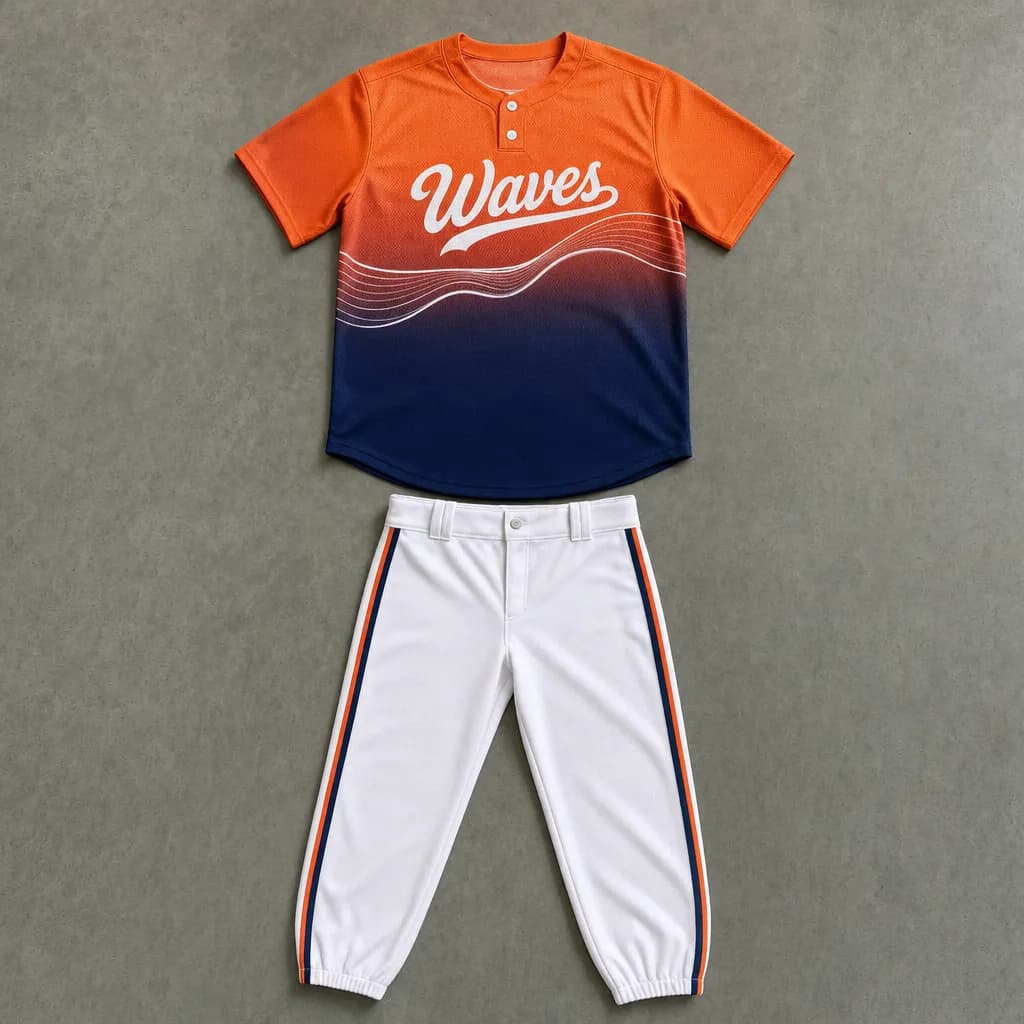
- Baseball pants and a belt, unless the team provides pants.
- Socks. Usually in team colour; high socks if your team wears knickers.
- Batting gloves. Optional, but most older players wear them.
- A water bottle, labelled, every time.
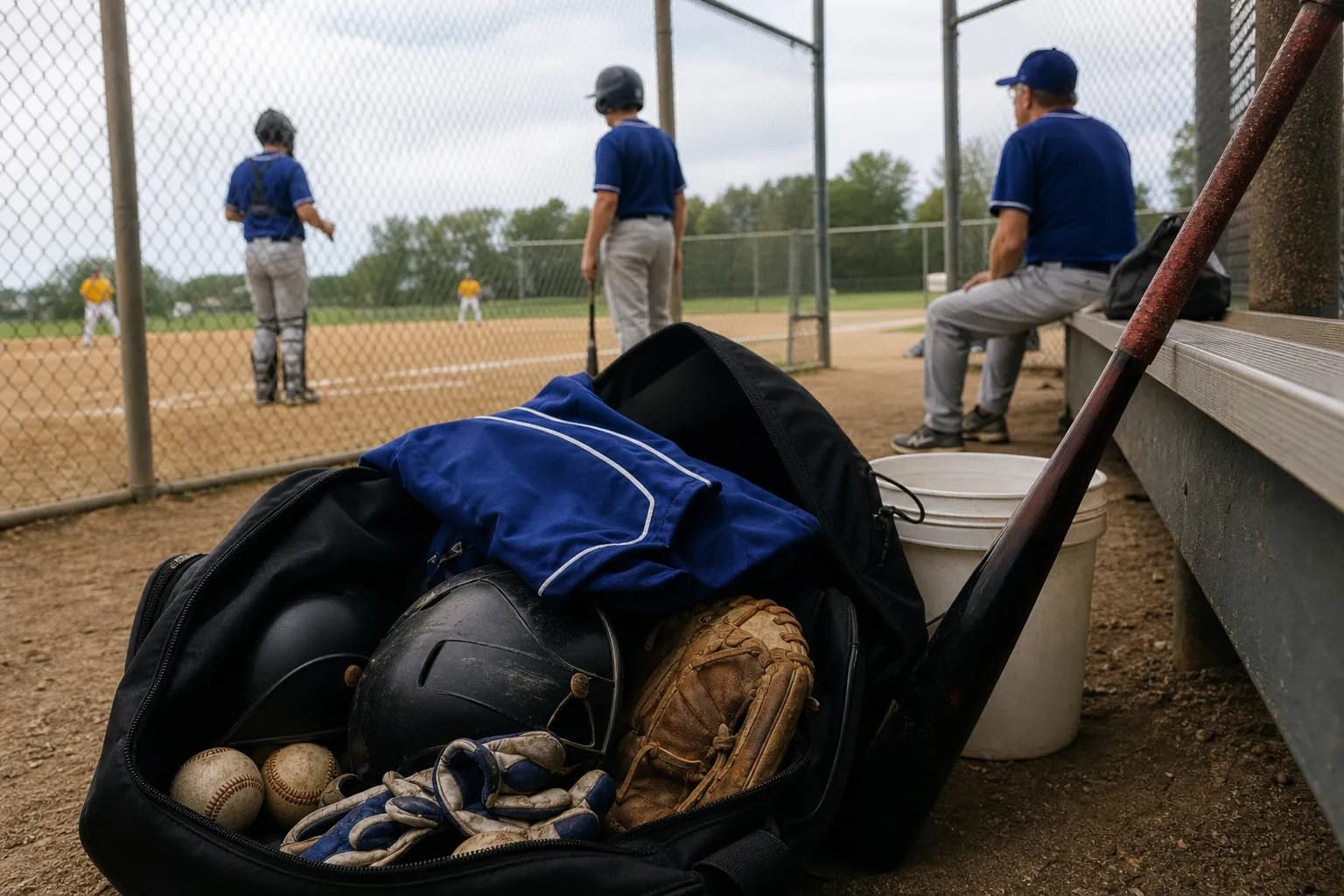
- An equipment bag big enough for all of the above. Bags with a bat sleeve stop bats rolling around.
Catcher's gear
Catchers wear the most equipment on the field: a catcher's helmet or mask, a chest protector, shin guards, a cup and a catcher's mitt. Many teams own one or two sets of catcher's gear and share them, especially at younger ages where players rotate through the position. Ask before buying.
What the team usually provides
Every association works differently, but a team equipment bag often includes:
- Game baseballs and practice balls, plus a bucket
- One or two sets of catcher's gear
- A few batting helmets and team bats
- Bases, a pitching rubber or throw-down plate for practices
- A first-aid kit and ice packs
- A scorebook and pencils
- The uniforms: jerseys at minimum, sometimes pants and socks
The uniform is often the biggest single purchase a team makes, and the one that takes the longest to arrive, so it's worth ordering first. See how to order custom baseball uniforms for the timeline.
By age group
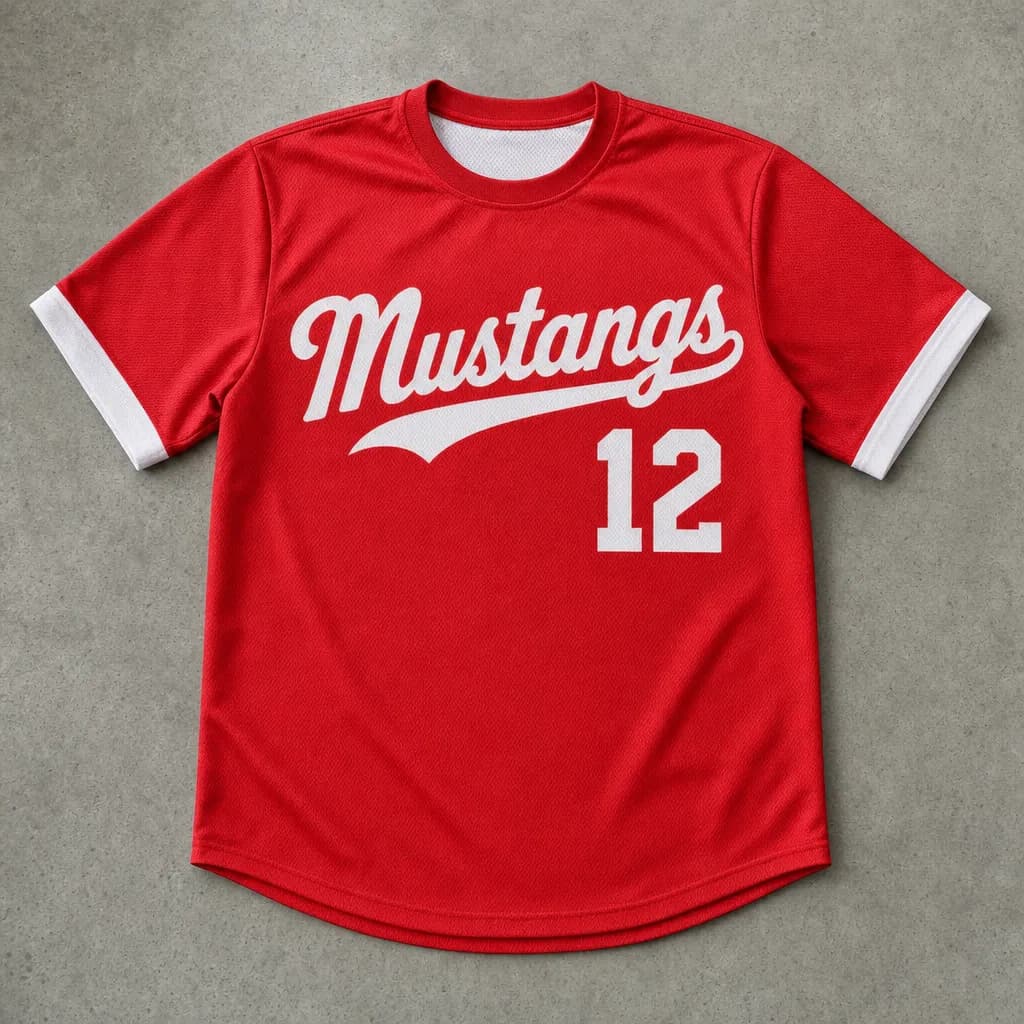
T-ball (about 4 to 6). A soft glove, a helmet that fits, running shoes and a team shirt. Most leagues supply bats and balls. Keep it simple: the goal is to have fun and learn to throw and catch. A crew neck jersey with no buttons is easiest for small players to put on themselves.
Youth house league (about 7 to 12). Add a bat that meets your division's rules, moulded cleats, baseball pants and a cup. Gloves get bigger as players grow.
Rep and travel (about 11 to 18). Players usually bring their own full kit: glove, helmet, bat, batting gloves, cleats and a proper equipment bag. Rep teams often have home and away uniforms. See rep and travel uniforms.
Men's and adult leagues. Bring your own glove, bat, helmet and cleats. The team sorts out the uniforms and usually the game balls. A good men's league jersey goes a long way toward a team that shows up.
Sizing gear for kids
Growing players are the hardest to equip. A few rules of thumb:
- Gloves should be closable by the player, not just a parent. Too big is worse than too small.
- Helmets should sit level, just above the eyebrows, and not shift when the player shakes their head.
- Bats: a player should be able to hold the bat straight out to the side for a few seconds without it dropping. If they can't, it's too heavy.
- Uniforms: for players between sizes, go up. A jersey that's a little long tucks in, and kids grow over a season. Our size charts list youth and kids' measurements.
What not to buy yet
New players and parents often overbuy. Hold off on these until the player has played a season: expensive composite bats, position-specific gloves for players under ten, sliding shorts, and anything the team is going to supply anyway. Ask the coach first, then fill the gaps.